Is Traditional Web Hosting Still Worth It? Opportunities and Challenges in a Market Dominated by Giants and AI.
The web hosting industry has never been an easy game. On one side, billion-dollar giants like AWS and GoDaddy dominate the market with massive marketing budgets and ultra-low prices.
On the other hand, countless small hosting companies fight over local customers, often charging little more than the cost of a pizza each month.
At the same time, DIY platforms like Wix, Squarespace, and Shopify have made it effortless to get a website online. And now, with AI site builders promising to generate entire websites in minutes, it’s natural to wonder: Is traditional web hosting on its way out?
The truth is more nuanced. Hosting isn’t dying – but the landscape is changing fast, and those who want to stay in the game need to adapt.
The Pressures on Traditional Hosting. Lower prices, tougher margins. Basic shared hosting plans now start as low as $0.99 per month and promise “unlimited” everything. This price war has turned hosting into a race to the bottom, leaving providers with very thin profits.
For small hosting companies, this is a big problem. They’re competing with giants like OVH, Hetzner, and large groups such as Newfold Digital (owners of Bluehost, HostGator, iPage, Web.com, Domain.com, and more). Competing on price or server power alone just isn’t realistic.
Big companies can keep prices low because they sell in huge volumes. Small companies don’t have that scale, making it harder for them to stay profitable and stand out.
Rise of All-In-One platforms. For small businesses and freelancers, platforms like Wix and Squarespace are often the easiest way to get online. They combine hosting, design, and site management in one simple package.
Users don’t need to set up domains, databases, emails, or deal with technical steps – they just pick a template and start.
Many beginners don’t even know the difference between a domain name and a website. Without help from someone technical, they naturally choose simple platforms that do everything for them.
With AI website builders, users don’t even need to drag and drop – they can just chat with a bot that instantly creates and edits their site. For many users, that kind of simplicity is hard to beat.
Cloud dominance. Many sales experts say to “go after the big fish” – meaning to target large companies with bigger budgets as customers. But in hosting, that’s easier said than done.
Big companies don’t want shared hosting or even their own servers. They want full infrastructure – something only major cloud providers like AWS, Azure, and Google Cloud can offer at scale.
Competing with them isn’t realistic for small providers. Without billions of dollars and years to operate at a loss, going after the same customers just isn’t an option.
This pushes small hosts out of the enterprise market and leaves them fighting for smaller, lower-value customers.
Changing user habits As platforms like Facebook grew, many small business owners stopped building their own websites. It was easier to use a Facebook Page where their customers already were.
Today, this has gone even further. Many businesses live entirely on social media or use Shopify instead of setting up their own hosting.
Dropshippers often build stores directly on TikTok or Instagram and run ads there, skipping SEO and Google Ads altogether.
People now prefer platforms that already have their audience, not standalone websites. This shift means fewer customers for traditional hosting.
Why web hosting still matters in a changing market. Even with new platforms and changing habits, websites aren’t going anywhere.
Hosting remains a core part of how people and businesses build and control their online presence for several key reasons:
Real control and ownership. Even though all-in-one platforms and social media are popular, they don’t replace having your own digital home base.
When you build on someone else’s platform, it’s never truly yours. You have to follow their rules, and if they change something or lock your account, you could lose everything overnight.
With your own hosting, you’re in charge. You can build your site however you want, move it to another provider if needed, or even use multiple providers at once.
Most importantly, you fully own your website and your content – something no platform can offer.
Trust & credibility. If you want to look professional, a real website matters. Clients are far more likely to trust a business with a custom domain than one with just a Facebook or Instagram page.
The same goes for email. A message from ceo@my-website.com feels way more serious and reliable than one from Gmail.
A professional online presence builds trust with customers, partners, and investors in a way social media alone never can.
Growing businesses need flexibility. As a business grows, so do its needs. First, you just want a website. Then you want analytics, heatmaps, SEO tools, eCommerce features, and integrations. Most all-in-one builders can’t handle this kind of growth.
The biggest downside of all-in-one platforms is their lack of flexibility. While simple to operate, they can’t adjust to your growing and changing needs.
Hosting, on the other hand, gives you complete flexibility. It may take a bit more work, but you can fully customize your site, add advanced features, and adapt as your business evolves.
Massive upgrade opportunity. The internet is full of old and outdated websites running on slow, insecure hosting. Many haven’t been updated in years, making them easy targets for security issues and frustrating to use.
For hosting providers, this is a big opportunity. Instead of chasing only new customers, they can help modernize these older sites – moving them to faster, safer hosting and giving them a fresh, updated look.
Site owners who struggle with slow speeds and poor reliability are often eager to upgrade when given a better option.
Opportunities for small hosting providers. So how can small hosting companies survive – and even thrive, in a crowded, fast-changing market?
The key is to focus on the areas where big players can’t compete: personal connection, flexibility, and community.
Build real relationships. Large corporations can offer low prices, but they can’t offer a personal touch. When customers feel a real connection to the person behind the service, it builds trust and loyalty.
A friendly email, quick help, or remembering a client’s name can turn a one-time buyer into a long-term customer. And loyal customers don’t just stick around – they also recommend your service to others.
Offer more than just hosting. Disk space and bandwidth are no longer enough to stand out. Customers expect more – and that’s where value-added services can make a difference.
For example, through ResellersPanel’s reseller hosting program, you can offer extras like free site builders, ready-made website themes, daily backups, email hosting, and website accelerators.
Many providers limit the number of email accounts on basic plans – some offer only one!
Offering unlimited mailboxes and solid email storage on all plans gives you a simple but powerful way to set yourself apart.
Small touches like these help make your offer more attractive and memorable.
Focus on niches and local markets. Don’t try to beat billion-dollar companies at their own game. Instead, own a smaller space where you can shine.
Local SEO is a great place to start. Ranking for “web hosting [your city]” is much easier than trying to win national keywords. You can also build trust through social media and online communities, where real interactions matter more than ads.
Platforms like Reddit are growing again thanks to the AI boom – and they’re still largely ignored by big hosts.
Joining relevant subreddits, offering useful advice, and becoming a trusted member can bring in warm leads without aggressive selling.
Think long-term. Getting new customers is tough, but keeping them is where small hosts can really win.
Over time, many customers renew their plans year after year, simply because they trust the service and don’t want to move.
When you offer reliable hosting and genuine support, your customers stick around. With ResellersPanel, we’ve built a stable platform that helps our partners maintain strong renewal rates over time.
This gives you a solid foundation to grow your business – you can focus on attracting new clients, while we help you keep your existing ones happy.
Traditional “$0.99/month” hosting has been pushed to the point where there’s almost nothing left to gain. But web hosting itself isn’t dead, it’s just changing.
Today, it’s less about storage and bandwidth and more about service, support, and specialization.
Small hosting providers don’t need to compete with the big players. Instead, they can focus on local businesses, niche markets, and personal support – the areas big companies often ignore.
In short, hosting is evolving, but there are still plenty of opportunities for those who adapt. Be personal. Add value. Find your niche. And build trust for the long run.
Are you in the millions on Etsy, or in Google Search, in the billions.
Where to start, How to start. Is this a hobby or business.
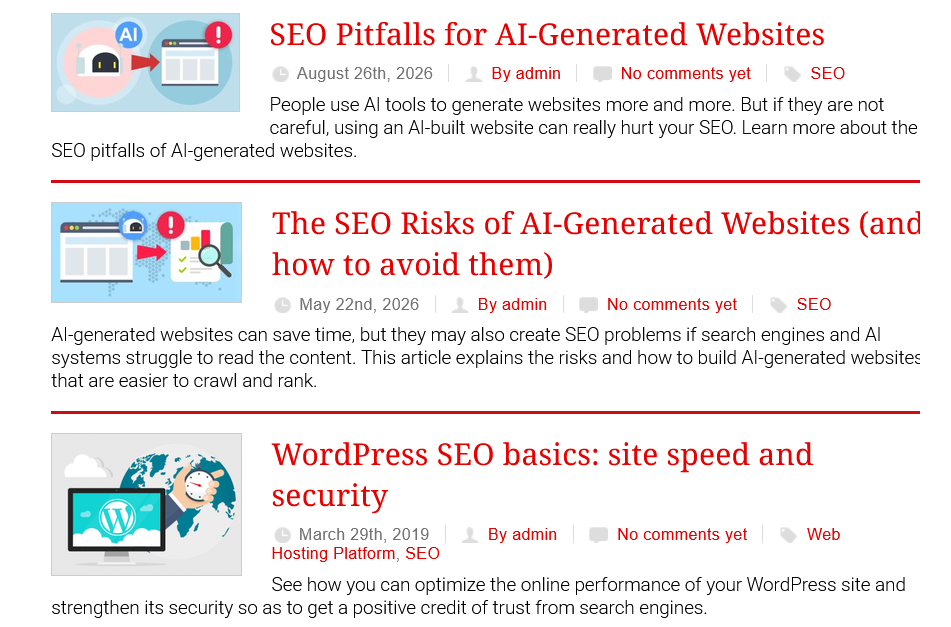
Store Promotion Guide for SEO. SEO stands for Search Engine Optimization. It is the practice of improving your website's structure, content, and authority so search engines like Google can easily understand it, rank it higher, and drive more organic (free) traffic to your business.
Check out the various channels you could use to promote your store to your potential customers. Choose the category you like and click on the link to get the information you need.
Submit your store sitemap to popular search engines like Google (via the Google Search Console), Bing, Yahoo and DuckDuckGo (via the Bing Webmaster Tools), or Yandex (via Yandex’s Webmaster Tools); Although it is not required, doing so can expedite the crawling process for search engine bots and provide them with a clearer understanding of your website's structure. Note: To have your store crawled and indexed by search engines, you need to register a domain name. Submit your website to web directories, into the relevant categories.
Email.
Put your store link in your email signature. Sign e-mails with your desired job position in your hosting company, for example: John Doe, CEO of RealHosting. This will intrigue people into checking the link for your store.
Community,
Become a member of forums and make sure you take an active part by posting your stories or comments. Use a catchy username. Put your store link in your forum signature. Don’t overly promote your store – this will get you banned from most forums. Instead, participate in discussions by providing valuable information – this will make other users check out your profile and your store.
Social Networks,
Join and participate in LinkedIn, Facebook, X (Twitter), Google+, Reddit, and more. Build a fan page in Facebook Promote your Facebook page on your website. Answer to all posted questions. Don’t delete negative opinions, answer them calmly Build a custom Facebook landing page and advertise your top offer. Consider running a Facebook game with rewards from your website – people will share your URL with their friends if they have a chance to win something. The awards can be in the form of various products or services, depending on your target audience.
Tweeting,
Make an account in X (Twitter) and tweet regularly Add X (Twitter) to your store, blog, lens and more Include an X (Twitter) application on your store, blog, Facebook page, lens.
Blogging,
Create your own blog using popular free platforms like Blogger, WordPress, MySpace, etc. Create posts about your products at least once a week and include links to your store’s product pages Use good keywords in your blog titles Post useful and honest comments on other web hosting / web design blogs Get guest writers for your blog. Write guest articles for other blogs and link back to your website. Write an ebook on a certain subject and provide it to users for free.
Newsletters,
Create newsletters for your store. You could try with MailChimp or YourMailingListProvider Keep an archive of your old newsletters on your store Promise your newsletter subscribers before they sign up that you will not sell or share their email with outside parties and that you will not spam them Let your subscribers know how often you will send them your newsletters before they sign up Put a newsletter opt-in form on your store/ blog/ lens.
Press Releases,
Write and submit press releases/ articles Hold online contests on your stores or blogs. Give away your products containing your links as presents Get other bloggers to write about your products. Example: PayPerPost.
Know-how Sharing,
Become a contributor on Quora, Answers.com, ThoughtCo, and many more. Create a name for yourself.
Discussion Groups,
Take part in discussion groups using services like Quora, LinkedIn Groups, Google Groups, Facebook Groups, and many more.
Podcasts,
Create a podcast about your products and store. Post your podcasts on popular platforms like Spotify, Podomatic, Buzzsprout, and Podbean, etc. Post your podcast on your blog/ website.
Photo Sharing,
Upload your product images to Flickr, BubbleShare, Fotolog and more Tag your photos at Flickr.
Videos,
Embed or link any of the videos on your store in forums or any platforms where you actively participate. Remember to put your links in your video and also to use keywords and descriptions. Monitor video comments – answer questions and delete spam.
Next Week information on,Links Exchange, Paid Advertising, Affiliate Programs.
Polls.
Add a poll to your websites, stores, and blogs. You can get free polls at TypeForm, Slido, SmartSurvey, etc. Post poll results on your blog. Provide analysis of the results.
Get your friends and family to include your store URL on their blogs. Get them to talk about your products for free. Engage in word-of-mouth marketing. Run an online forum Offer freebies with purchases. Make sure your freebies contain your company’s name, logo and the URL of your store Exchange links with yourself – between your store, blog, and more. Exchange only related links Write an e-book related to your products and advertise your store in your book. Distribute your ebook for free Consider running print ads in your local community.